3,400+ people.
One protocol.
Every transformation below is submitted by a verified buyer, timestamped at upload, and reviewed by our clinical team before it reaches this page. No filters, no retouching, no stock photography.
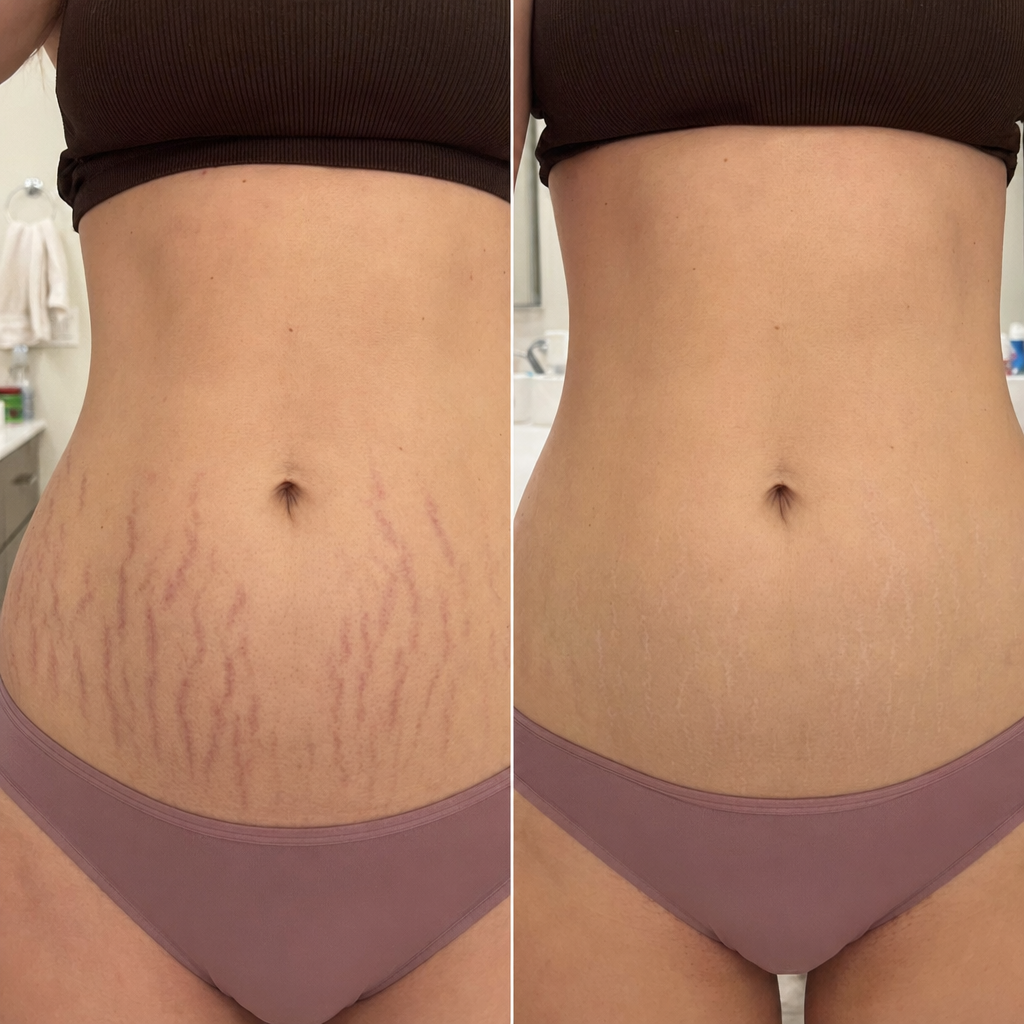
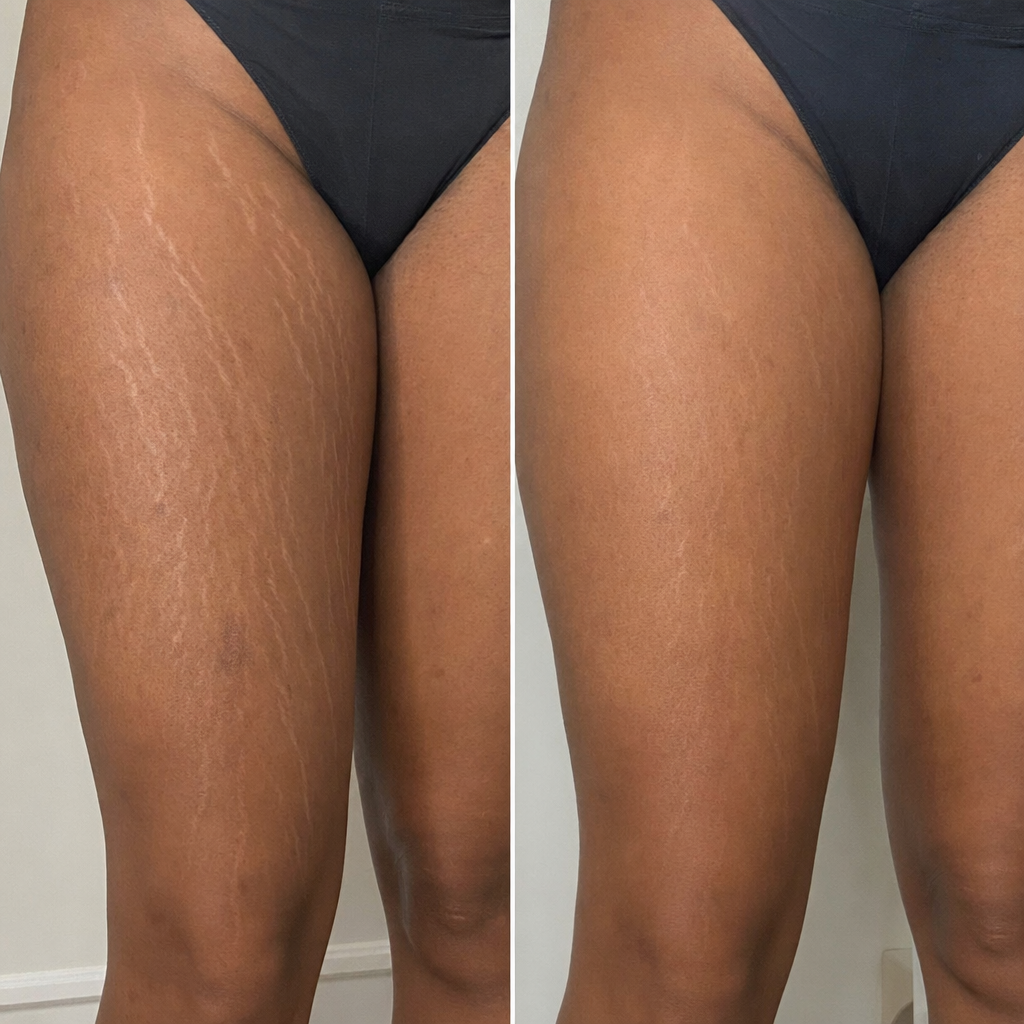
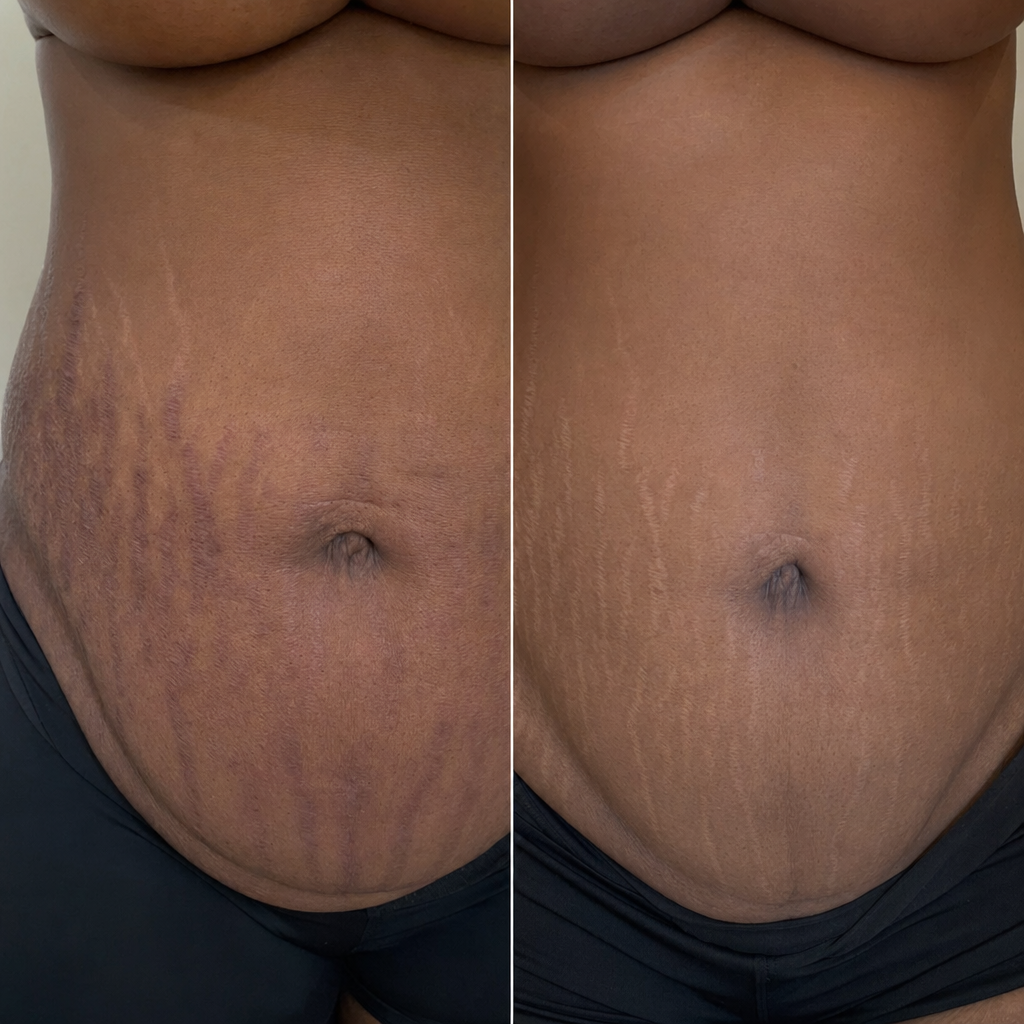
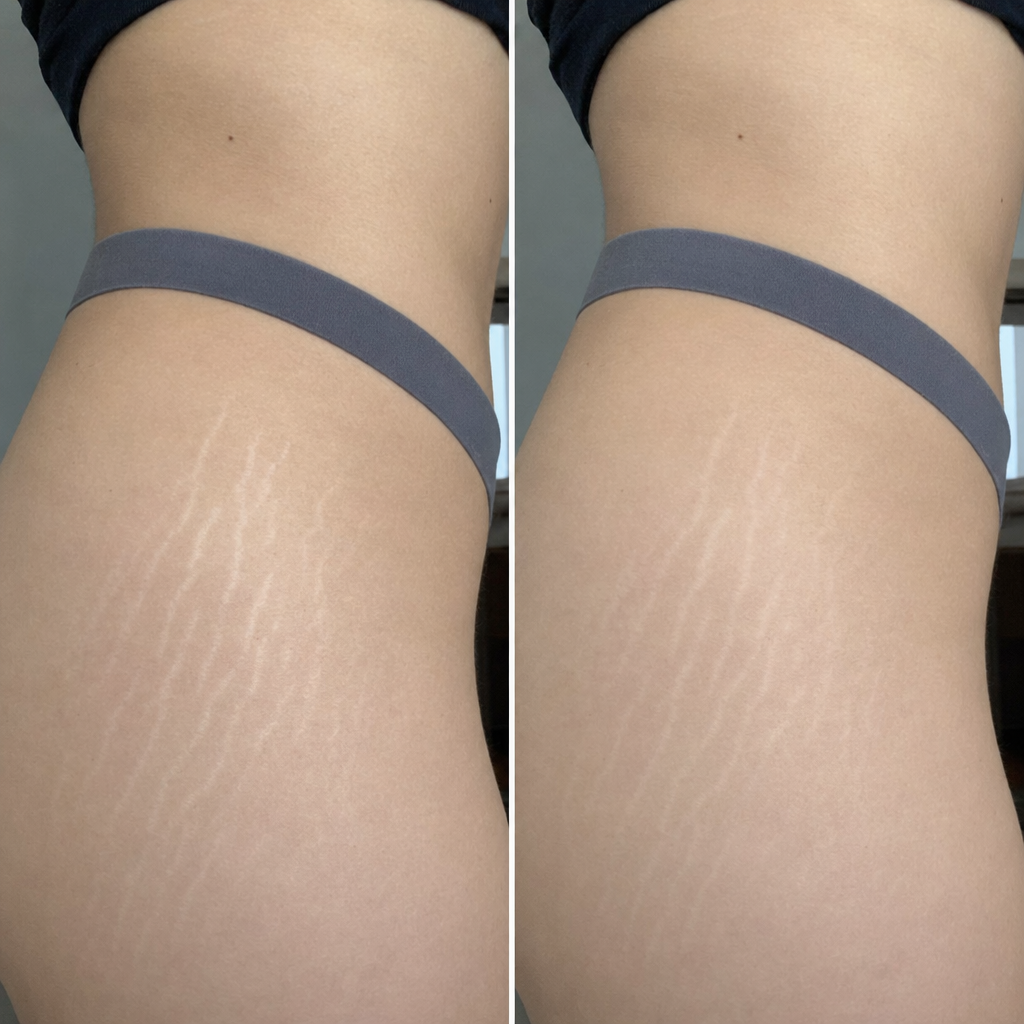

"By week 8 the red had already cooled. By week 16 they're the same color as my skin. My husband saw it before I did."

"I lost 60 pounds and got covered in marks. Three creams, two oils, one peel later — this is the first thing that actually faded them."

"I've had these since I was 14. I stopped wearing shorts at 16. Last week I wore a bathing suit for the first time in six years."

"Lost 38 lb over the past year and the marks across my belly were the part I couldn't fix with the gym. Wore the belt nightly. Smoother and lighter by week 8."

"The dark purple color is what I hated most. That's the part that went first. The texture is the last thing to smooth and it's still going."
"Eight weeks in. Already a visible shift. I wasn't expecting anything this soon — most things I try take three months to even maybe work."
"I stopped wearing bikinis six years ago. By week 12 I ordered one. By week 16 I wore it."
"Doctor said the dark stripe down my belly might never fully fade. Fourteen weeks later it's the same tone as the rest of my skin."
"Six months postpartum and the inner-thigh marks were the part I never thought would budge. They're now barely visible in normal lighting."
"Lost 40 pounds. Hips picked up wide silvery marks I hated more than the weight. They are visibly smaller and lighter every photo."
"I tried a drugstore oil for a year. I tried cocoa butter before that. Neither of them touched it. This did, in four months."
"My dermatologist looked at my progress photos and asked if she could share them with a colleague doing PBM research. I said yes."
"Second baby. Worse marks than the first. Did the belt while nursing. Did not expect this to be the easiest thing I did this year."
"I stopped hiding in family photos. That's not a before/after you can measure in millimeters but it's the real result for me."
"I had really dark purple lines on my inner thighs since I was 15. They are now the same color as the rest of my leg. I checked with three mirrors."
"Hips and lower belly were where my marks lived. Belt sat exactly where I needed it. Texture is the part that surprised me — the divots flattened."
"I lost 60 pounds and got covered in marks. Three creams, two oils, one peel later — this is the first thing that actually faded them."
Four members on
what sixteen weeks
actually felt like.
Every video below was recorded by the member on their own phone, with no script, no incentive beyond a free refill, and no editing beyond trimming the front and back silence. Tap to play.
How we verify every result on this page.
The before/after industry has a credibility problem. Lighting changes, filters, and stock photography have made consumers rightfully skeptical. We built a three-step verification process to earn that trust back.
Buyer-verified.
Every transformation is linked to a verified purchase. No purchase, no submission. We cross-reference order ID, shipping address, and product batch number.
Timestamped.
Photos are uploaded through our member portal, which strips EXIF data and re-timestamps at upload. The 'Week X' label on each card reflects the actual elapsed time between first-use registration and photo submission.
No retouching.
We do not edit, filter, or retouch any member photo. Lighting and angle vary because these are real people in real bathrooms. What you see is what they submitted.
Every published review carries a verified-buyer badge, order ID, and purchase timestamp — viewable in full on our Okendo profile.








"The Dermosol protocol is one of the few at-home photobiomodulation devices I have reviewed where the wavelength selection, power density, and dosing schedule are consistent with what the peer-reviewed literature supports. The 630nm and 660nm pairing targets both the papillary and reticular dermis — which is where striae distensae actually live. Most consumer devices miss this entirely."
What people ask before they start.
How soon will I see fading?
Most members report the first visible change between weeks 6 and 8 — typically a softening of color in red or purple marks. Structural texture improvement (the 'dip' or 'groove' flattening) usually follows between weeks 10 and 16. Older, silver-white marks take longer because the collagen matrix is more established.
Does it work on old stretch marks?
Yes, but timelines are longer. Fresh marks (red, purple, or pink — called striae rubrae) respond fastest because the collagen matrix is still actively remodeling. Older marks (white or silver — striae albae) can still improve, but expect 16 to 24 weeks rather than 12 to 16. The protocol is the same; the biology just needs more cumulative dose.
Does it work on darker skin tones?
Yes. Red light at 630–660nm is not significantly absorbed by melanin, which means efficacy does not vary meaningfully across Fitzpatrick skin types I through VI. Our clinical cohort (n=128) included all skin tones, and fading rates were consistent. Darker skin types may actually see faster chromatic improvement because the contrast between mark and surrounding skin resolves sooner.
Will it work if I'm keloid-prone?
We recommend consulting your dermatologist before starting if you have a history of keloid formation. While photobiomodulation has shown promise in some scar literature, the Dermosol protocol has not been specifically validated for keloid-prone skin. Your dermatologist can assess whether the collagen-stimulating mechanism is appropriate for your scar type.
Is it safe during pregnancy?
The belt itself does not emit UV and operates at a power density well within safety thresholds. However, we recommend waiting until after delivery to begin the protocol. The topicals (Intensifier Serum and Firming Cream) have not been tested on pregnant women, and the hormonal environment during pregnancy can affect how the skin responds to any intervention. Postpartum is the ideal starting window.
What if I don't see results?
If you complete the full 16-week protocol and do not see visible fading, contact our support team. We offer a full refund on the device, all refills, and shipping — no store credit, no partial refund, no fine print. We ask only that you have used the belt at least 5 days per week for 16 weeks, which is the minimum effective dose established in the clinical literature.
Do the results last?
Yes. The collagen remodeling triggered by the protocol is structural — it is not a temporary cosmetic effect. Once the dermal matrix has been rebuilt, the improvement is permanent in the same way that a healed wound does not un-heal. That said, new stretch marks can form from future weight changes or pregnancies, and those would require a new course of treatment.
How does it compare to in-office laser treatments?
Fractional laser (Fraxel, CO2) works by a different mechanism — it creates controlled micro-injuries to trigger a wound-healing response. It is effective but requires multiple in-office sessions ($800–$1,600 each), involves downtime, and carries a higher risk profile (burns, hyperpigmentation, especially on darker skin). The Dermosol protocol achieves comparable collagen remodeling through photobiomodulation — no injury, no downtime, no clinic visits — at a fraction of the cost.