I Spent $2,400 Treating My Stretch Marks. They Kept Coming Back. A $99 Protocol Fixed It.
I knew exactly what to do. I was wrong.
I worked in a medical spa for four years. I have done more Fraxel consultations than I can count. I know what the before-and-after photos look like, and I know what the disclaimers say.
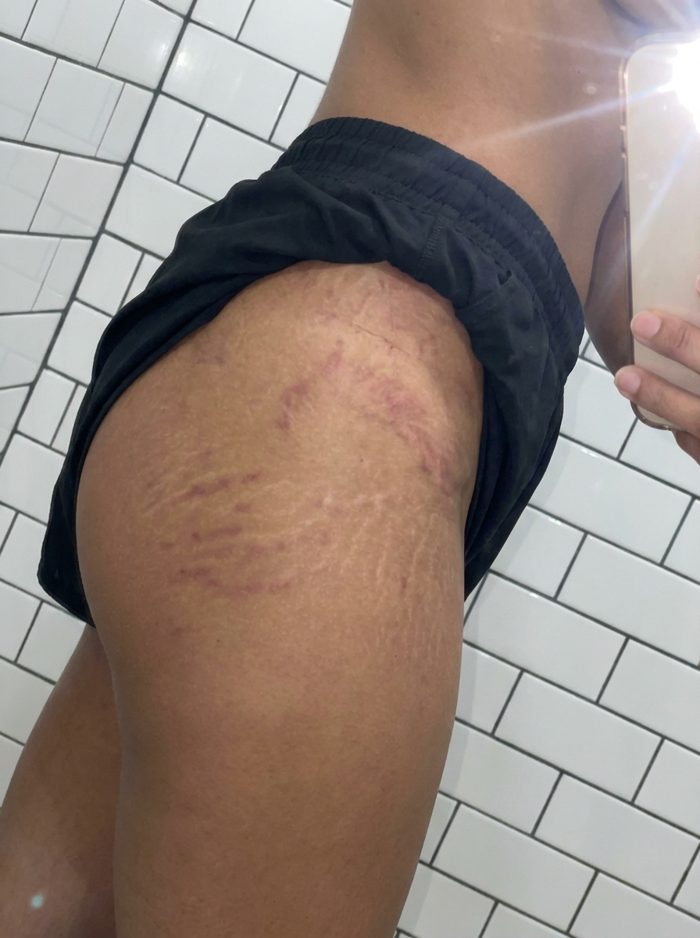
So when I developed stretch marks after a significant weight change at 26, I thought I had an advantage. I knew exactly what to do.
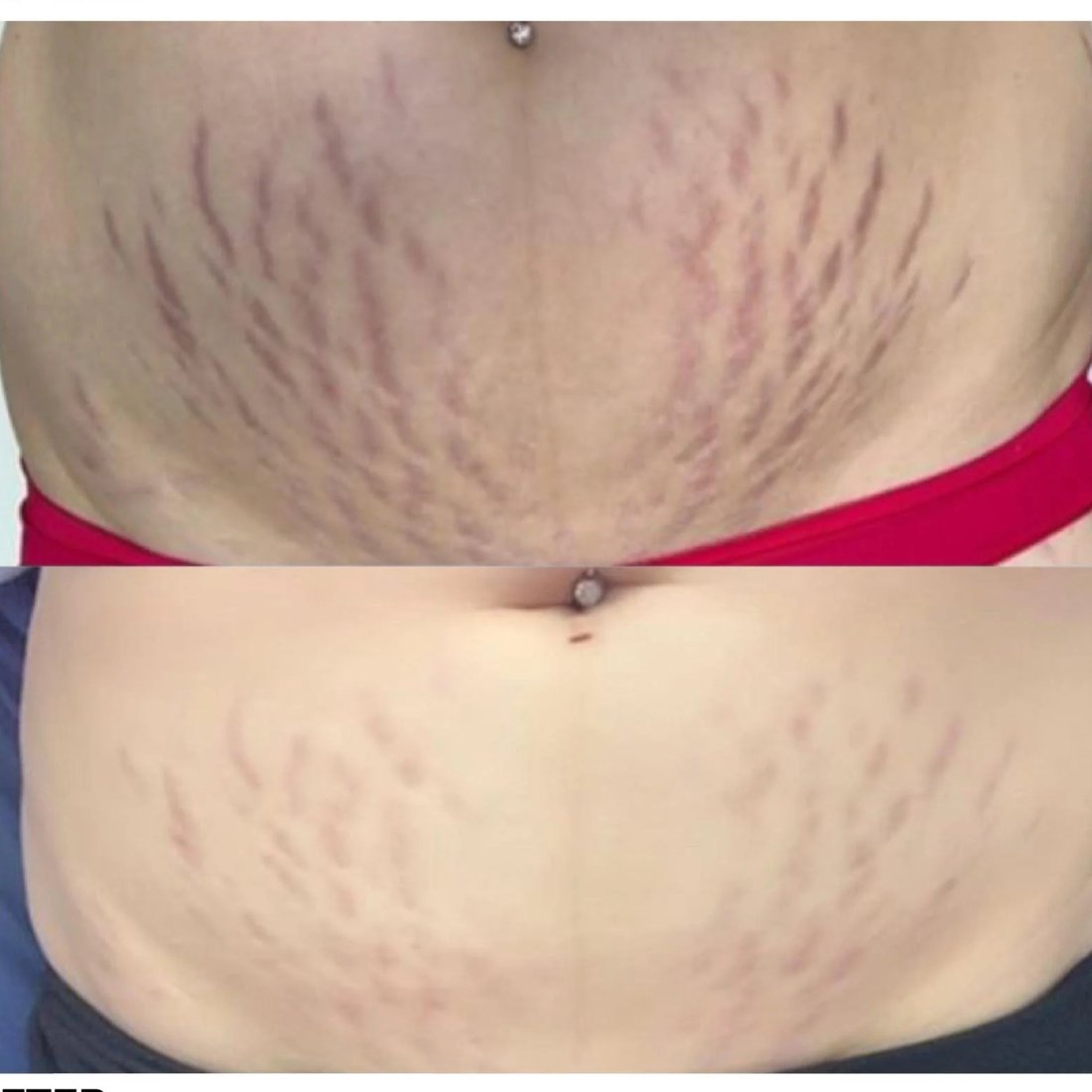
I did three sessions of Fraxel CO2. A course of microneedling with PRP. Prescription-strength tretinoin for eight months. In total: $2,400 — more than I had ever spent on any skin concern in my life.
And at the end of it, the marks were still there. Lighter, maybe. But still there.
I once had a client who had spent $8,000 on laser treatments over two years for hers. She came to me because the results were nothing close to what she had been promised — and I had nothing better to offer her. That bothered me for a long time.
That was when I started actually reading the research instead of the marketing.
And the research kept pointing at something none of my treatments had addressed: depth and consistency. One-off procedures create a burst of damage and hope the skin responds. What established scar tissue actually needs is a therapeutic dose, at the right depth, repeated daily for months — with someone adjusting the plan as your skin responds.
That is a protocol, not a procedure. And the only one built exactly that way is Dermosol.
The Dermosol™ 16-Week Telehealth Program
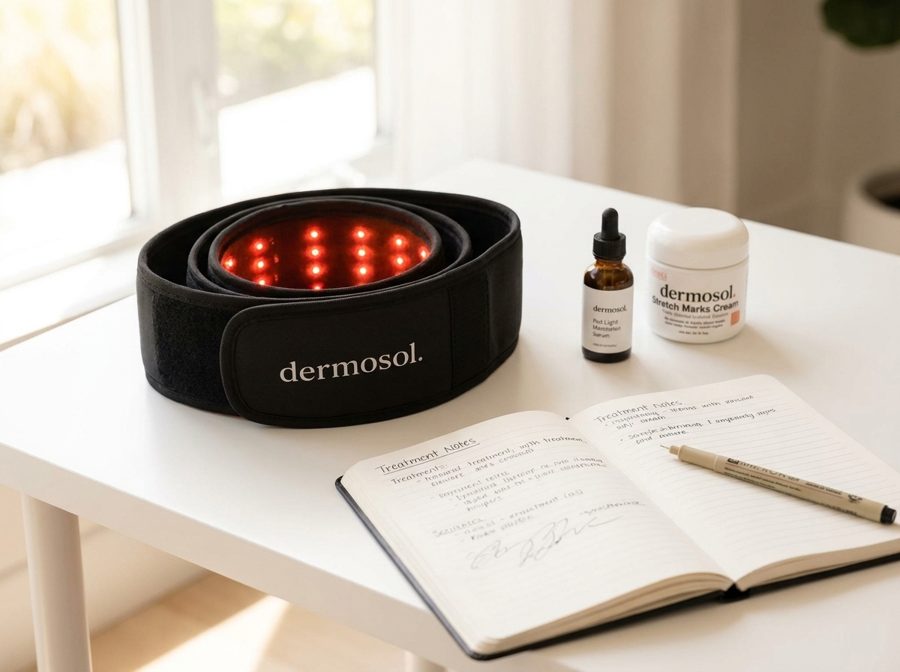
The box did not look like much — and after four years behind a med-spa front desk, I mean that as a professional observation: a QuadTech red-light belt, a dropper bottle of intensifier serum, and a jar of firming cream. No console, no handpiece, no consent forms. I unpacked it on my desk and inspected it the way I used to inspect the devices reps brought into our clinic.
The routine is fifteen minutes in the evening. Serum on first — it is formulated to improve how the skin takes up the light — then the belt wraps over the area while the light runs, and the cream goes on after. That is the entire protocol. I have watched clients drive forty minutes each way for appointments that involved less clinical thinking than this.
The half I would have dismissed as a gimmick turned out to be the half that convinced me: the telehealth side. You photograph your skin at week 0, and every four weeks a board-certified dermatologist reviews your progress photos in the Dermosol app and adjusts your plan to how your skin is actually responding. In four years of selling procedures, not one of them came with that.
What the research actually says.
I found the depth figure on a Tuesday night, months after my third Fraxel — wine in hand, studies open, finally reading for my own skin instead of a sales script.
Stretch marks are dermal scars. The damage sits 1.5 to 4mm below the surface.
Fraxel and ablative lasers work at the epidermal-dermal junction — controlled surface damage to stimulate collagen. They can improve texture and tone, but they cannot reach the depth where the original tearing occurred. Microneedling gets closer; still not deep enough for structural remodeling. Retinoids work at the cellular level but cannot penetrate to the deep dermis in meaningful concentrations. Every treatment I had paid for — every treatment I had ever sold — stopped short of the damage.
Red light at 630nm and 850nm penetrates 8–10mm into tissue — reaching the deep dermis directly. Peer-reviewed studies show therapeutic-dose red light at these wavelengths stimulates fibroblast activity, increases collagen and elastin synthesis, and triggers remodeling of scar tissue.
The key variables are wavelength, dose, and consistency over time. That is exactly what the 16-week protocol is built around — with a dermatologist checking the dose is doing its job.
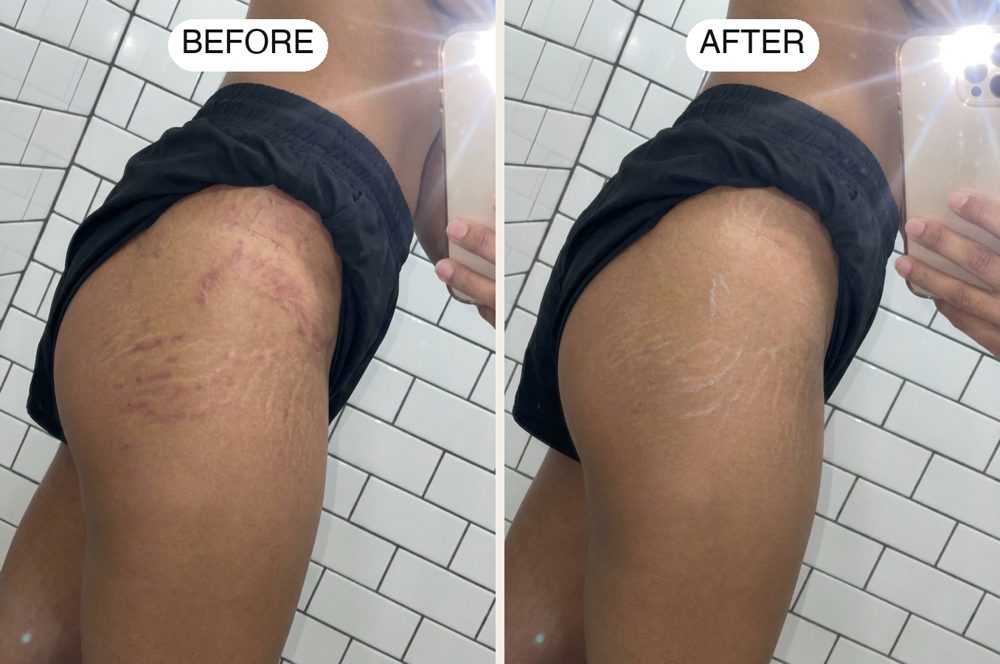
16 weeks from now, they're quieter, softer — and you never once sat in a treatment chair to get there.
Start My Program $99 todayEvery dollar back if you're not happy — and the belt is yours to keep.
Your dermatologist reviews your progress every 4 weeks.
The part no procedure ever gave me — an expert watching the dose actually work.

Why a protocol beats a procedure.
Weeks 1–4 · Therapeutic threshold. Daily exposure builds to therapeutic dose in the dermis. Fibroblasts activate; texture and tone start improving. Fifteen minutes a night — less time than I spent driving to one Fraxel appointment.
Weeks 5–8 · Structural remodeling. The scar tissue begins to reorganize. The serum enhances light absorption. My oldest marks started narrowing.
Weeks 9–12 · Collagen integration. New collagen integrates into the dermal matrix; elasticity measurably improves. This is where I passed everything the $2,400 had achieved.
Weeks 13–16 · Completion. The structural change is permanent — rebuilt collagen does not reverse when you stop. Sixteen weeks, $99 to start, and it did what three clinical procedures could not.

By week 16, I'd stopped auditing my legs in every mirror — and started saying yes to shorts again.
Start My Program $99 todayEvery dollar back if you're not happy — and the belt is yours to keep.
I do not say this lightly, because I sold those procedures for a living: if your marks are the problem, the dermis is the target — and a supervised protocol is how you reach it.
My client with the $8,000 laser bills? She is on week 11 of the protocol. Her texts are all capital letters now.
2,140+ members started with the same skeptical click — and I was the most skeptical one here.
Start My Program $99 todayEvery dollar back if you're not happy — and the belt is yours to keep.
Don't Just Take Our Word For It

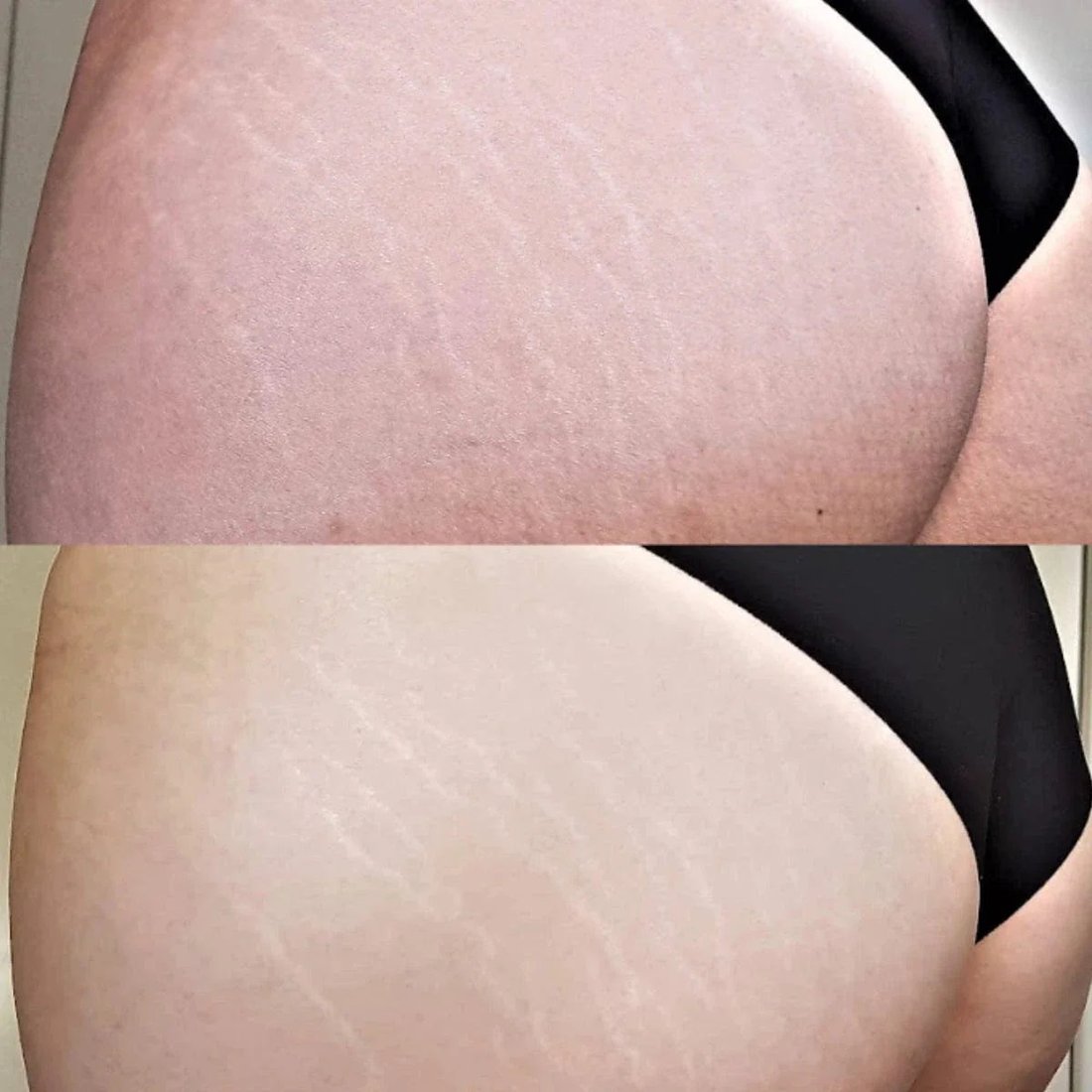
 Amber P. Replied · 2 Replies

Dermosol™ 16-Week Telehealth Program
The QuadTech belt + your first month of treatment ship free.
Renews on a 28-day protocol cycle — exact billing shown before payment · cancel anytime.
Common questions
How is this different from Fraxel or microneedling?
Lasers and microneedling create one-off controlled damage near the surface and can't consistently reach the 1.5–4mm depth where stretch-mark scar tissue lives. The protocol delivers a daily therapeutic dose of 630nm/850nm red light to the deep dermis for 16 weeks — depth plus consistency, with a dermatologist reviewing the response.
How long until I see results?
Most members feel the tightness and itching ease within the first two weeks. Visible color change typically starts around weeks 4–8, and texture keeps improving through week 16. Your dermatologist reviews progress photos every 4 weeks and adjusts the plan if anything stalls.
What exactly do I get for $99 today?
The full 16-week dermatologist-supervised program, the QuadTech red-light belt (yours to keep), and your first month of the Red Light Intensifier Serum and Sculpting Firming Cream — with free priority shipping.
How does billing work after the first order?
The protocol renews on a 28-day cycle. The exact recurring amount is shown at checkout before you pay anything, and you can cancel anytime from your account portal or by emailing support@dermosol.com.
What if it doesn't work for me?
You're covered by the 16-week zero-risk guarantee: if you're not happy at any point, you get every dollar back — and the belt is still yours to keep.
Is it safe, and can I pay with HSA/FSA?
The protocol uses non-invasive low-level red light for 15 minutes a day and is designed for daily home use on all skin types. Purchases are HSA/FSA eligible.
Money-back guarantee — the belt is yours to keep either way